Mieczysław Biegun - an amazing fake news career about Menachem Begin
Here in Poland, even the smallest mention of Menachem Begin, Prime Minister of Israel in 1977-1983 born in Poland in 1913, it is always remembered that his original name was "Mieczysław Biegun".
The problem is that it was not so!
Nobody knows who invented Mieczysław the Pole - or when, although suspicions are such that it could have been during the presence of the Anders Army in British Palestine in 1942-43. One can only guess what was behind the invented name. A nickname that makes him one of ours? April Fools Reverse Engineering of the Name Menachem Begin?
I don't remember any Israeli prime minister before him, but the 14-year-old stuck in his memory when Begin took the helm. From then on, he was a character I followed regularly and sometimes even closely - for example during Camp David and the First Lebanon War - until his resignation in 1983. Begin caught my attention again when I came to Poland, because his roots here are often emphasized: growing up in Brest, studying law at the University of Warsaw, epic wandering with Anders' Army from the Soviet Union to the Holy Land - and his supposedly proper name.
Just like almost everyone - from Norman Davies and President Duda to POLIN and the "Millionaires" jurors from September this year ("Mieczysław Biegun won the Nobel Peace Prize for 1978 together with the president of: A. Poland B. Israel C. Egypt D. Czech ") - I have never doubted the truth of Mieczysław Begin. But why? Suffice that this surname is mentioned wherever Begin is mentioned. Moreover, it is known that many Jews adopted Hebrew surnames when they started a new life in Eretz Israel. David Grün became David Ben-Gurion; Golda Meyerson became Golda Meir; Ariel Scheinermann became Ariel Sharon.
Recently, while getting ready to write a series about the fathers of contemporary Israel coming from the lands of today's Poland, I immersed myself in reading about Begin's life - I focused especially on his life in Poland. I noticed right away that none of his numerous biographers (Eric Silver, Ned Temko, Avi Shilon, Yehuda Avner, Ofer Grosbard, Daniel Gordis) writes anything about any "Mieczysław". On the contrary: I found a lot in these works about giving him the name "Menachem". Further searches quickly revealed Begin's university documents, in which he has been listed - from 1931, that is from the very beginning of his legal studies - as Menachem Begin. Then I came across an interview on Polish Radio with Dr. Piotr Gontarczyk, a leading expert in revisionist Zionism in Poland, of which Begin was an outstanding figure. In this interview, Gontarczyk was dismayed, as I thought when he was asked about Mieczysław the Pole. After a while he replied, “I heard such versions, but always in the documents of revisionists, in the press, before the war as [some interferences on the part of the interviewer]. I have a copy of his file and he uses the name Menachem Begin all the time ”.
What about the years Begin spent in the Gymnasium Romuald Traugutt in Brześć nad Bugiem? Maybe the name of Begin there was Mieczysław Biegun? Soon I found several dozen-page-long publications drawn up by school administrators. And here is the information that sixteen-year-old Menachem Begin was one of the top students in his class and that he participated in a German-speaking group with his brother Herzl Begin. This solved the matter so much that in the article I wrote a week ago for Plus Minus about Begin, I considered "Mieczysław Bieguna" a myth. After all, since his name was Menachem Begin in the state high school, what were the chances that in the two private Jewish schools he had attended before, his name was Mieczysław? I decided that it was less than none.
In the next steps, I managed to enlist the support of my friend, attorney Bartłomiej Kachniarz, who knows the Belarusian archivist in Brest (Nikolai Aleksandrów), who examined the files of Begin preserved there. The archivist explained that no, he had never seen the name "Mieczysław Biegun" on any documents related to Menachem Begin. Kachniarz also contacted Dr. Gontarczyk, who wrote back to him: "In my opinion, he never used this name [Mieczysław Biegun]."
The full solution to the puzzle came only from the Menachem Begin in Jerusalem. In response to my question to the Center, I received the following reply:
Dear Mr. Steele, In response to your inquiry regarding the name of "Mieczysław Biegun", I can inform you that the Menachem Begin reviewed all documents relating to Menachem Begin's early life and we contacted the archivist of the Jewish Community in Brest. There is not a single document bearing this name. Moreover, on all of them there is a proper name "Menachem". Indeed, it is a myth and a forgery.
It remains a mystery, however, how it is possible that the name "Mieczysław Biegun" has become ubiquitous in Poland. I think that the simplest explanation is the one I shared with my Israeli friends - firstly, that "Mieczysław Biegun" has no pejorative connotation in Poland at all. After all, it appears literally everywhere, regardless of politics or other sympathies. Makes it ours. After all, Begin (which was often emphasized by both supporters and opponents) was genuinely very Polish. So much so that it is easy for Poles to exaggerate his Polishness. For example, with the story that in 1978 at Camp David spoke to Brzeziński in Polish at chess. Not true, but you wish it were!
Nevertheless, when I recall that in 2017 President Duda spoke about "Mieczysław Pole" not only in Jerusalem, but also at the Menachem Begin, I am a little surprised that the matter was not cleared up then.
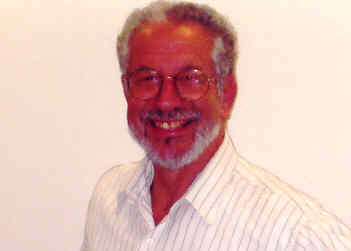
Philip Earl Steele
* Philip Earl Steele - American historian and editor, former lecturer at the University of Warsaw. The author of the book "The conversion and baptism of Mieszko I" and many texts, especially religious studies, published both in Poland, Israel, the Czech Republic, the USA and Great Britain. His book will be published soon. Israel and Evangelical Christians: "An Alliance by God's Sent".