So are there or aren’t there judges in Jerusalem? There are, but they’ve disappeared.
Yossi Sarid
^
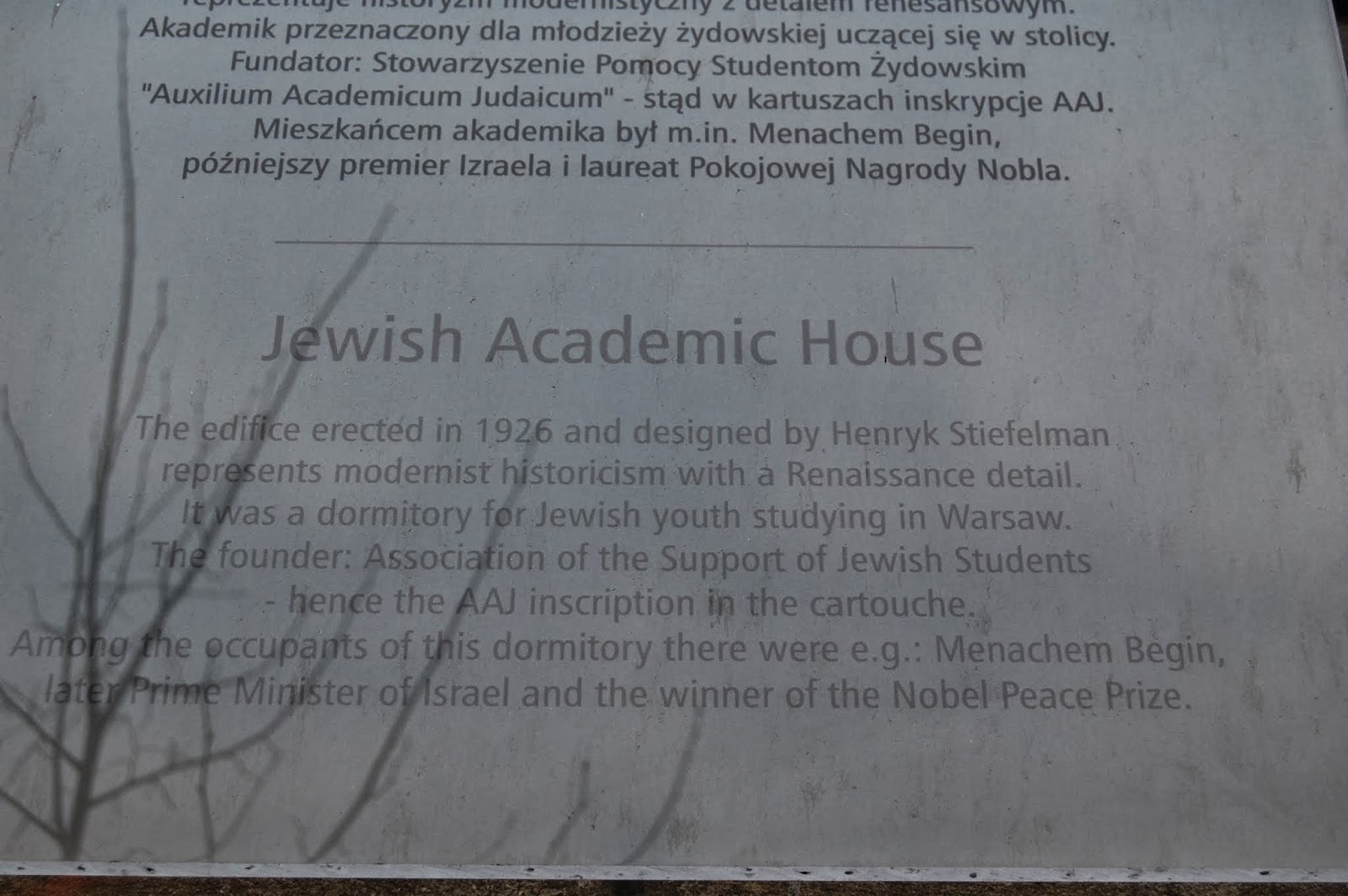
Monument to Menachem Begin to be unveiled in Brest
BREST, 30 October (BelTA) – The 100th anniversary of Menachem Begin, a Nobel Peace Prize winner, the seventh Prime Minister of Israel, will be celebrated in his hometown of Brest, BelTA learnt from the Israeli Embassy in Belarus.
The celebrations will feature a ceremony to unveil the monument to the outstanding Israeli politician and statesman on 31 October. Attending the ceremony will be representatives of the Belarusian Foreign Ministry, local authorities, Jewish organizations, Israeli diplomats, and sponsors of the project. Herzl Makov, the Head of the Menachem Begin Heritage Center, will arrive in Brest to attend the ceremony. Ambassador Extraordinary and Plenipotentiary of Israel to Belarus Yosef Shagal will read out a welcome letter from Israeli Prime Minister Benjamin Netanyahu.
“The erection of the monument to Menachem Begin in his homeland is an unprecedented event,” the embassy said. This is the first monument to an Israeli politician in a post-Soviet country. The monument has been built in the Brest historic downtown near the house that used to be the school which Menachem Begin attended. The monument was created by a group headed by architect Leonid Levin, winner of the Lenin Prize, President of the Union of Belarusian Jewish Associations and Communities (UBJAC).
The celebrations will also feature a presentation and the First-Day-of-Issue dedication ceremony for the souvenir stamps “National Leaders of Israel Born in Belarus”. The set of souvenir stamps were prepared by the Ministry of Communications and Information Technology of Belarus on the initiative of the Israeli Embassy. They are dedicated to the outstanding Israeli politicians who were born in Belarus: Chaim Weizmann, Zalman Shazar, Yitzhak Shamir, Menachem Begin, and Shimon Peres.
Netanyahu is a master of the art of Shoah business, a true disciple of Menachem Begin, who was the first to release the genie of the Holocaust from the bottle. David Ben-Gurion tried to keep that bottle sealed so that Israel’s Jews would not go mad: They have already been so wounded by the Holocaust, why pour fear on their wounds? But Begin remained in Polish exile, haunted and persecuted. Brisk is here, and the memory is still alive, still terrifying. In death, he left us the legacy to live in the shadow of death. Netanyahu is fulfilling that legacy as a true one-man Shoah.

...despite the myriad risks, the Israeli cabinet decided to attack.
Why? Above all, because its leaders truly believed that the nuclear program was an imminent existential threat. Israeli Prime Minister Menachem Begin would continue saying, until his last days, that in those years he experienced nightmares of Jewish children dying in a second nuclear holocaust -- one that it was his duty to prevent. And the "Begin doctrine" that he created -- that Israel will not tolerate weapons of mass destruction in the hands of an enemy state -- is alive and well today.
What many international observers dismiss as alarmism was a very real factor in the mind of Begin, a Holocaust survivor who lost both his parents to the war. The same echoing trauma and sense of historical duty is ubiquitous among Israel's top leadership. And it is apparently the prism through which Benjamin Netanyahu sees the world: "It's 1938, and Iran is Germany," the current Israeli prime minister told a conference in 2006. "[Iranian President Mahmoud Ahmadinejad] is preparing another Holocaust for the Jewish state."
Nor was the attack on the Iraqi nuclear facility an isolated event. In 2007, Israel again decided to strike a nuclear reactor in defiance of its strongest ally. In the preceding year, U.S. and Israeli intelligence assets had discovered a covert Syrian plutonium reactor being built with North Korean assistance. For long months after its detection, Israel and the United States had intimately cooperated on how to handle its removal. It was only when President George W. Bush told Prime Minister Ehud Olmert that the United States had decided to take the matter to the United Nations, rather than strike itself -- or agree to let Israel strike -- that Jerusalem decided to act, even against an explicit American objection.
In both the Syrian and Iraqi cases, the Israeli government exhausted all other options before resorting to a military strike. Begin launched a sabotage campaign against Iraq's nuclear program in 1979 after his cabinet decided that diplomacy had run its course. Iraqi scientists were assassinated, French technicians were threatened, and containers holding key parts of the reactor were blown up on their way to Iraq. But in January 1981, an internal intelligence committee ruled that sabotage was no longer "sufficient in delaying the program," which lead to the ultimate decision to strike. In 2007, Olmert negotiated with the Americans in the hope that they would do the dirty work for him, and he only directed his military to strike after Bush turned him down.
Nothing indicates that Netanyahu's thinking is any more dovish than that of Begin or Olmert. The Israeli premier is keenly aware of history and knows how small and short-lived the costs to Israel were in the past. He also knows that Israel was later greatly appreciated for the decisive actions it took, that the Israeli Jewish population takes the perceived threat from Iran seriously, and that the "Begin doctrine" is lauded domestically to this day. In an Oct. 15 Knesset speech marking the 40th anniversary of the 1973 war, he said, "There are cases when the thought about the international reaction to a preemptive strike is not equal to taking a strategic hit."
...The curfew and search followed the King David Hotel bombing and was aimed at picking up as many terrorist suspects as possible. We were all roped in for the operation and as usually happened I was attached to CID screening. I was bag-carrier to Sgt Martin of Jewish Affairs. He was murdered in Haifa just a few weeks later, shot by the Irgun outside his flat one lunchtime as he turned to wave goodbye to his wife.
Our top-screening unit was set-up in the quadrangle of a secondary school - can't remember which. The army provided the cordons and the searching was done by police assisted by the Airborne Division and other units. Arrested suspects were sent by army transport from field-screening to the top-screening unit where they were held in temporary barbed-wire cages. After screening, they were either detained or sent back home under escort - most were sent home...
My little part in the operation was to wade through the long CID terrorist suspect lists while Sgt Martin did the questioning.
One of the terrorists we were after was Menechem Begin. CID had information on where he was supposed to be hiding but drew a blank. I remember they went back again that night and had another unsuccessful search. Years later, I read Begin's book and learned that he had been bricked in inside a false wall and almost suffocated.
On the final day of the curfew, while we were packing our equipment, one of the Airborne sergeants had a potter round a cellar, right below where out four screening tables had been standing. He noticed one of the walls seemed to have a very new coat of whitewash. He gave it a good thump, it collapsed and revealed a large room that was full of explosives and was being used as a hand-grenade and bomb factory. It took us a couple of hours to move everything out. On reflection , I can't help thinking they should have taken that sergeant round to Begin's suspected hiding place.