skip to main |
skip to sidebar
The Begin Center received this email:
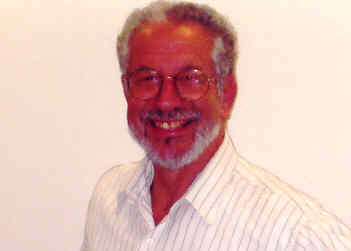
Could this be a real person?
Well, back in 2008, one "Neal Wohlmuth", writing in the North California Jewish News on February 1, advocated genocide as a “solution” to the “Palestinian problem”. He also stated that Israel should expel the Arabs from Gaza and finished in a flourish:
“Those who refuse to leave should be annihilated. Start the carpet bombings.”
He seems to have left a comment here, realating to a 2018 JPost article on the King David Hotel bombing.
I am going to make an educated guess that indeed, this is an anti-Zionist Jew who has adopted a line of tongue-in-the-cheek provocation black propaganda to harm Israel's interests. A Jew because of the familiarity with Judaism displayed in his email.
There is/was a Neal Wholmuth in San Francisco (p. 9) but I doubt he is our Neal, even if he sponsored a kiddush. But who knows?
In Septemeber 2017, he left a comment regarding a Jerualem Post article on the King David Hotel bombing.
But to respond to his quips, three Jewish freedom fighters, engaged in resistance actions against a repressive mandatory regime which had reneged on its commitments and responsibilities as per the 1922 League of Nations decision to reconstitute a Jewish national homeland were hanged the previous day. Moreover, in standing by its 1939 White Paper after the Holocaust which kept Jews languishing in Europe, it had lost all moral authority, Prisoners of war are not to be treated as criminals. Menachem Begin ordered that the British soldiers be hanged and that put an end to the gallows in the Land of Israel.
And thanks to Begin and the Irgun and the other Hebrew undergrounds, we can eat cake in a free Israel today.
^
Bygone Days: They went to the gallows singing 'Hatikva'YEHUDA AVNER,
THE JERUSALEM POST
Jul. 25, 2007
The 12th day of the Hebrew month of Av, which falls this year on Friday July 27, marks the 60th anniversary of the execution by the British authorities in Palestine of three members of the Irgun underground - Avshalom Haviv, Yaakov Weiss, and Meir Nakar. This column is dedicated to their everlasting memory.
As 1947 dawned, the more judicious counsels in Whitehall cautioned that the death knell of Britain's 30-year rule of Palestine was within earshot. "The sands of time are running out," warned the British high commissioner. But most in Whitehall were either blind or hard of hearing. Some even asserted that the existing political order in the Holy Land was established by the Almighty and, therefore, eternal.
Had they given the matter deeper thought they might have foreseen the inevitable. But thinking ahead is given to statesmen and chess players, not to autocrats and bureaucrats, and certainly not to a man of such anti-Semitic bent Ernest Bevin, the British foreign secretary of the day, who famously warned the Jews "not to push to the head of the queue" in their demand for the imperative opening of Palestine's gates.
LED BY Menachem Begin, the Irgun revolt against the British hardened. The governing authorities, driven by an irresistible hubris of self-interest and colonial blindness, and embracing the delusion of decaying imperialists in every age that punitive brutality will cow the rebels into giving up their resistance, began sentencing captured Irgun fighters to the most severe forms of capital punishment: flogging for relatively minor offenses, and hanging for relatively major ones.
The executions were frequently carried out in the Acre fortress, a Crusader citadel restored by the Turks and considered impregnable. In May 1947, in what was probably the Irgun's most daring exploit, a wall of this great bastion was breached, allowing for a mass escape. Three of the attacking party - Avshalom Haviv, Yaakov Weiss, and Meir Nakar - were captured, tried and condemned to death.
ON THE DAY of the execution, July 29 1947, the district commissioner of Galilee visited the Acre prison accompanied by the commissioner of prisons, to ensure the gallows were readied and all other necessary arrangements in place.
It would be wrong to think of these men as in any way vindictive or malevolent. They were, as we shall see, British bureaucrats doing their job. Their writ did not extend to pondering the iniquity of destroying healthy, conscious men or the unspeakable wrongness of cutting lives short when they were in full tide; or meditating on the significance of pulling a lever, causing a living person to drop through a hole, neck broken, rope twisting on itself, the body slowly revolving. Their task was to see to the formalities and the practicalities of the hangings, aware that if anything went wrong their superiors would wring their necks.
So imagine their astonishment when, upon their calling on the Acre prison superintendent at his quarters, he told them in no uncertain terms that he would not carry out the executions.
WHAT TRANSPIRED subsequent to that was meticulously documented in a number of top-secret and confidential reports to the higher authorities, quoting what each of these officials said and did on that day. Their names and functions were: Mr. Thorne - district commissioner of Galilee, Mr. Hackett - commissioner of prisons, and Mr. Charlton - superintendent of the Acre jail.
The following is a redaction of their exchange:
Charlton [prison superintendent]: I suppose you know that I am not going to carry out these executions.
Hackett [commissioner of prisons]: You are the officer detailed to carry them out. I have here the warrants.
Charlton: I do not agree with the policy of Government regarding these hangings. The whole thing stinks. Why can't Government carry out the executions in a normal manner, giving the prisoners and relatives proper warning as usual? I want no part of it. I am unhappy about the whole affair. Please send me home. I've had enough of this.
Hackett: Do you absolutely refuse to carry out the death sentences?
Charlton: Yes. I have carried out 44 executions during my service in this country and I have not raised any objections before. But now I'm adamant. I had a definite promise from Mr. Bromfield when he was acting Commissioner of Prisons that secret executions such as that carried out in the hanging of Dov Gruner [a prominent Irgun commander (actually ordinary soldier of the ranks)] will under no circumstances occur again. I will not preside under the circumstances you have outlined. I am ready to execute the men on Friday of this week [August 1] or next Tuesday [August 5] provided the proper open procedures are followed, meaning that the date is announced in advance and that the relatives are given the opportunity to visit the condemned men prior to the event.
Hackett: But the lawyer of the accused and their relatives will be informed prior to the event.
Charlton: I am not satisfied. Why can't Government carry out the executions in a normal manner, giving the prisoners and their relatives proper advance warning, as is usual procedure? The whole prison will be upset. It will be impossible for me to keep order or discipline if the executions are performed in a secretive manner. I am not going to carry out these executions, not because I am afraid, but solely because it is against my conscience. If the executions are postponed as I suggest, and done later in a proper and regular manner, I will certainly do as ordered.
Thorne [district commissioner of Galilee] to Hackett: The time now is 4.15 p.m. The intention to execute the three men will be made public in an hour-and-three-quarters, at 6 p.m. By that time the relatives will have been informed in Jerusalem. [To Charlton]: Unless you have someone else to carry out the executions, someone whom you can rely upon, we have to inform Government what is happening. I need hardly point out the political and other consequences if the executions are postponed because an Officer of the Crown refused to carry them out.
Charlton: I'm expecting Mr. Clow [superintendent of the Nablus jail] at five o'clock, and I'll ask him if he will carry out the executions. I cannot guarantee that he will.
Thorne: Under the circumstances, and in view of the fact that Clow may not get here in time, and given the importance of the time factor, I'm going to Haifa immediately and inform Government of the situation. [Haifa was the nearest place with a secure telephone line].
LATER, THORNE phoned Hackett from Haifa:
Thorne: Government confirms the executions must go forward as arranged. If Charlton still refuses to carry them out, either you or Clow must do so under all circumstances. Even if Charlton has a change of heart, he has become so excited he won't be in a fit state to carry them out, so there is no use in pressing the matter further.
At 5.30 p.m. Clow, the superintendent of the Nablus prison, arrived at Acre.
Hackett by phone to Thorne: Clow is here. He will carry out the executions if that's Government's final instruction. He is pressing for a postponement, though.
Thorne: A postponement is out of the question. The executions must be carried out as ordered. You have confirmed that the warrant is made out to "the superintendent of Acre prison" [and not to Charlton by name]. So I have relieved Mr. Charlton of that post and have appointed Mr. Clow as superintendent in his stead.
Hackett to Thorne [at midnight]: The tensions have relaxed. There will be no hitch in the executions.
AND, INDEED, there was none: Avshalom Haviv was hung at four in the morning, Meir Nakar at 4.25, and Yaakov Weiss at 5.00.
No one in the Acre jail slept that night. One prisoner, whose Irgun name was Natan but whose real name was Chaim Wasserman, was in a nearby cell, and he smuggled out a letter to Irgun commander Menachem Begin, describing what he saw and heard. He wrote:
"Early this morning our three comrades went heroically to the gallows. We were already aware of what was going to happen between four and five in the morning, and pressed against the bars with bated breath watching helplessly what was going on around the cell. The prison superintendent, Major Charlton, had left the place yesterday afternoon and was not seen again. Toward evening a party of hangmen arrived.
"The officers went in and informed the condemned men they were to be executed between four and five in the morning. Their reply was to sing "Hatikva" and other songs in powerful voices. They then shouted to us that the hangings would begin at four o'clock, in this order: Avshalom Haviv, Meir Nakar, Yaakov Weiss. They added: 'Avenge our blood! Avenge our blood!'
"We shouted back, 'Be strong! We are with you, and thousands of Jewish youth are with you in spirit.' They replied, 'Thanks,' and went on singing.
"At two a Sephardi rabbi whom we could not recognize from afar [it was Rabbi Nissim Ohana] was brought and stayed in the cell 15 minutes.
"At four in the morning Avshalom began singing "Hatikva," and we joined in loudly, pressing against the bars. At once armed police came up to the visitors' fence near our cell. At 4.03 Avshalom was hanged. At 4.25 we were shaken by the powerful singing of Meir. Hardly able to breathe, we nevertheless joined in. He was hanged at 4.28. At five o'clock the voice of Yaakov, this time alone, penetrated our cell, singing "Hatikva." Again we joined in. Two minutes later he was hanged. Each of the bodies was left hanging 20 minutes before being carried off, one by one.
"The chief hangmen were Hackett, inspector of prisons, and Clow, superintendent of the Nablus jail.
"At dawn we informed the prison officers through an Arab warder that we would not be responsible for the life of any Englishman who dared enter the jail yard. We declared a fast and prayed. Later in the morning we found the following inscription on the wall of the cell of the condemned: 'They will not frighten the Hebrew youth in the Homeland with their hangings. Thousands will follow in our footsteps.' Next to it was the Irgun insignia and their three names in the order they were executed."
May the memory of Avshalom Haviv, Meir Nakar, and Yaakov Weiss be forever blessed - yehi zichrom baruch.
The good jailer
By Yair ShelegIn two weeks, the Bible that a condemned member of the Irgun gave to his British prison guard minutes befo re he and a fellow militia member blew themselves up will be returned by the guard's son in a state ceremony in Jerusalem, exactly 60 years after the events.
Meir Feinstein and Moshe Barazani actually gave the guard, Thomas Goodwin, two gifts: By asking him to step out of their cell, the members of the pre-state militias Irgun and Lehi also spared his life.
The ceremony will be held at the Museum of the Underground Prisoners. The Bible, which Feinstein kept in his cell, contains about 115 woodcut illustrations by Gustave Dore. The son of Sergeant Thomas Henry Goodwin, the guard, will hand the volume to Feinstein's nephew, Eliezer. Goodwin's son does not wish to reveal his full identity due to his work in the British gas industry, which entails a close relationship with several Arab countries. Subsequently, the book will be presented for safekeeping to the museum, which is located in the same building in the Russian Compound that housed the Mandate-era prison where Feinstein and Barazani took their own lives rather than be executed a few hours later.
Goodwin kept the book at home. "I knew about this Bible my whole life and saw it once," his son says. "But my father didn't say much about his service in Palestine." When he found the book, after his father's death in November 2005, the son remembered that his father always wanted to return to the Bible to the family. "My mother said he told her that if he died first she should try to contact the family and return the Bible."
Goodwin Jr. e-mailed the Prime Minister's Bureau. His message was forwarded to the museum, which is dedicated to perpetuating the memory of Olei Hagardom ("those who ascended the gallows" - members of the pre-state Jewish militias who were arrested by British Mandate authorities and sentenced to death by hanging). The museum, which maintains regular contact with the prisoners' families, had no difficulty locating Feinstein's nephew, and thus the circle was closed.
Feinstein wrote a dedication in the Bible to the guard, in Hebrew and English, which was in effect his last testament: "In the shadow of the gallows, April 21, 1947, to the British soldier as you stand guard, before we go to the gallows, accept this Bible as a memento and remember that we stood in dignity and marched in dignity. It is better to die with a weapon in hand than to live with hands raised. Meir Feinstein." There is a hint ("to die with a weapon in hand") that the prisoners might be in possession of a weapon but the words apparently did not arouse Goodwin's suspicion.
The son recounts his father's description of how he obtained the Bible: "[Feinstein and Barazani] called him to their cell and asked to speak with him in private. Feinstein handed him the Bible. Then they told him they wanted to say a few prayers in private and asked him to step away. He went into the corridor and they blew themselves up. Apparently they sent him away because they didn't want him to be hurt." Feinstein and Barazani detonated two booby-trapped oranges they had hid in their cell.
The story of Feinstein and Barazani became one of the most famous tales of heroism in the history of Zionism. Feinstein, of the Irgun, was sentenced to death for his part in the bombing of the train station in Jerusalem. Barazani, of Lehi, was apprehended four months after Feinstein's arrest with a grenade in his pocket and accused of attempting to assassinate the military commander of Jerusalem. Condemned prisoners were usually held in separate cells, but according to museum director Yoram Tamir, "Feinstein was put in Barazani's cell because he needed assistance as a result of the injuries he sustained during his capture, which led to the amputation of his left arm."
Tamir says the Lehi had envisioned a suicide operation during the hanging of one of their men prior to this incident: "They called it Operation Samson, in an allusion to the suicide of the biblical figure." Eliezer Ben-Ami, who prepared the makeshift orange grenades while he was imprisoned along with the two men, confirms that the plan was to turn their ascent to the gallows into an action that would harm the British authorities.
"Of course, we needed the condemned men's approval," Ben-Ami recalls. "Moshe agreed right away, but since there was an Irgun man with him we had to request their approval, too. We asked the person responsible for Irgun prisoners in the jail, Yehoshua Tamler, what he thought, and he said they needed the consent of the top command. We had to wait a few days, despite fearing that they would be taken to the gallows in the meantime, until approval arrived from the commander of the Irgun, Menachem Begin."
The original plan was to hide the explosives in the set of tefillin brought to the jail by Rabbi Aryeh Levin ("the father of the prisoners"), who ministered to the underground prisoners throughout the period. (Levin, of course, knew nothing about the phylacteries' intended use.) When Ben-Ami opened up the boxes of the tefillin he realized they were too small to hold the required amount of explosives. One day at lunch in prison, he looked at the oranges that were served for dessert and had the idea of scooping out the flesh and replacing it with explosives. Two booby-trapped oranges were smuggled into Feinstein and Barazani's cell. Ben-Ami kept a third for himself, "to see how long it takes for the peel to dry out and fall off, exposing the explosive."
To Ben-Ami's dismay, he found that within a few days, before the date was set for the men's execution, the peel of the orange in his cell had begun to detach. "We passed [Feinstein and Barazani] an order to dismantle the grenades, but that day they were informed that they were to be hanged the following day," Ben-Ami recalls.
The announcement of their imminent execution came from Rabbi Yaakov Goldman of the Jewish Agency, who had been asked to be with the condemned men in their final hours and to recite with them the vidui, the confessional prayer recited by Jews before death. Goldman's involvement was out of the ordinary, since this was usually Levin's role.
Tamir says Goldman replaced Levin after Feinstein, a student of Levin's, asked for his opinion on the anticipated suicide. When Levin rejected the idea, Goldman was brought in instead. "[The switch] was an intelligence failure on the part of the British," Feinstein's nephew Eliezer says. "They should have realized that something unusual was about to happen."
Goldman's involvement also caused a change in the plan. He told the condemned men that he insisted on escorting them right up to the gallows. Tamir: "Goldman told them that he wanted the last face they see to be that of a Jew. He repeatedly rebuffed their request that he not escort them, missing their hints." His insistence caused Feinstein and Barazani to kill themselves in their jail cell rather than on the gallows, since Goldman as well as the British guards would have been killed.
According to contemporary newspaper reports, Goldman left the cell and went to the officers' room in the prison to wait there until the men were brought out for their execution, which was scheduled for 2 A.M. But at 11:40 P.M. a loud explosion shook the prison. The guards who rushed to the condemned men's cell found their bodies. Ben-Ami, who was in his own cell at the time, remembers hearing first the traditional song "Adon Olam," with all the militia prisoners joining in, and then the explosion. Goldman's account is slightly different: He recalls Feinstein and Barazani singing "Adon Olam" while he was still with them, followed by "Hatikva" (which became the Israeli national anthem), but does not remember hearing singing right before the explosion.
This story begs the question of why the men did not blow up Goodwin together with themselves. After all, if the original plan was to take as many British guards as possible with them when they died, then why not at least make sure that Goodwin was killed? One possible answer comes from Goldman. The rabbi relates that he spoke with the two prisoners from the corridor outside their cell.
"A British sergeant stood there guarding them," Goldman recalls. "They told me, 'We want you to thank the sergeant. He's a good fellow, he treated us well.'" Goodwin's kindness was also apparently the reason Feinstein decided to give him his Bible.
Ben-Ami confirms this: "In our secret correspondence with the two, when the gallows suicide operation was still the plan, they said that they had two guards, one who was a bastard and one who was nice, and they said that if the 'good cop' was there when they ascended the gallows they would try not to hurt him."
The ceremony in two weeks will mark not only the return of the Bible to the Feinstein family but also the 60th anniversary of the entire Olei Hagardom episode. In 1947, the hangings of members of the Jewish underground reached a peak, with the execution of nine of the 12 who were eventually hung.
Irgun and Lehi prisoners refused to recognize the legality of British rule in Palestine, including a rejection of the courts' authority to judge them. Naturally, they refused to ask for clemency, even when it was hinted that such a request could lead to a more lenient sentence.
This policy aroused a public debate in the Jewish community, even among Irgun and Lehi sympathizers: Were terror operations justified? Was it right to insist on non-recognition of British rule even at the price of the condemned prisoners' lives? The equivocal stance in relation to the underground's terror activities was perhaps best expressed by the "national poet" of the time. After Feinstein and Barazani's suicide, Natan Alterman published "Lail Hit'abdut" ("night of suicide") in his regular "The Seventh Column" in Davar. The poem was mainly a paean to their heroism. But after commending the men's bravery, it concludes with three stanzas condemning the stupidity and arrogance of their commanders.
According to political scientist Dr. Udi Lebel of Be'er Sheva's Ben-Gurion University of the Negev, who has researched the role of the executed Irgun and Lehi fighters in the national memory, during the term of Israel's first prime minister, David Ben-Gurion, there was a deliberate effort to suppress the memory of Olei Hagardom.
"There was no mention of them in the school curriculum," Lebel says. "The most blatant examples of the attitude toward them was the speed with which Acre Prison, where most of the underground prisoners were hanged, was converted into a mental hospital and the prison in Jerusalem, where Feinstein and Barazani committed suicide, into a book warehouse - all to prevent them from becoming heroic sites and pilgrimage destinations," Lebel states.
Ben-Gurion's successor, Levi Eshkol, was more conciliatory. Lebel says he ordered the Acre psychiatric hospital moved, although this did not take place until after 1977, when Begin became prime minister. By total coincidence, in 1963, when Eshkol formed his first government, Am Oved published "Bekolar Ehad" (English title: "The Gallows"), by Haim Hazaz, which was devoted to the suicide of Feinstein and Barazani, treating it as a tale of exceptional heroism. (In order to maintain literary freedom Hazaz changed Feinstein's name to Menachem Halperin and that of Barazani to Eliahu Mizrahi in the novel.)
Hazaz, like Alterman, was identified with the Labor movement, although he was not a party member. "Their story attracted him from the beginning," his widow, Aviva Hazaz, says. "He stressed that it was not about the Irgun and the Lehi or the issue of the undergrounds, but about kiddush hashem (sanctifying the name of God, used to describe Jewish martyrdom). This subject appealed to him since his bar mitzvah, when his father taught him what Maimonides wrote about kiddush hashem. He even looked for a way to connect with the people from the undergrounds to get to know the story from up close, but they weren't very receptive to him," Aviva Hazaz recalled.
According to Hazaz's widow, it was a random meeting with Rabbi Aryeh Levin that brought the writer back to the story. "In 1958 Haim was very ill and in hospital. Another patient was put in his room, it was Rabbi Aryeh Levin. They formed a special bond and naturally they also talked about the men of the underground. There were two elements at that time that made him go back to the story: the attempt to stand up to death and the compassion that Rabbi Aryeh Levin showed for the underground prisoners."
Eshkol sent Hazaz a warm letter after the book's publication. "Some say that book was a factor in the decision to bring Jabotinsky's bones to Israel," Aviva Hazaz says. She says her husband was horrified by the conversion of the site where Feinstein and Barazani took their lives into a storeroom for the Bialik Institute. As a member of the institution's board of directors he actively tried to have the books moved.
In the early 1970s, the status of Olei Hagardom changed again, when streets throughout the country began to be named for them. The most prominent instance is in Jerusalem's Armon Hanatziv neighborhood, which was built after the area was captured in the Six-Day War. In a gesture of "historic vengeance," its main street in the neighborhood, not far from the mansion in which the British high commissioner lived during the Mandate, was called Olei Hagardom. Other streets were named for individual prisoners, including Feinstein and Barazani.
The change in status reached its peak when Begin came to power. Instead of following the tradition of giving his Memorial Day speeches at the country's main military cemetery, on Mount Herzl in Jerusalem, Begin went to the cemetery in Safed, where the first Oleh Hagardom, Shlomo Ben-Yosef, is buried. It was during Begin's term as prime minister that the prisons in Jerusalem and Acre were converted into national museums. Stamps were also issued in memory of the underground prisoners.
Lebel notes another interesting and significant step taken by Begin: "He 'annexed' to the list of Olei Hagardom others from other periods, such as Na'aman Belkind and Yosef Lishansky from Nili (the underground that aided the British during World War I, whose members were hanged by the Turks); Eli Cohen, the spy who was hanged in Damascus; and even Mordechai Schwartz from the Haganah, who was hanged by the British after he killed an Arab policeman in 1938."
The Haganah leadership refused to acknowledge Schwartz as a casualty from its ranks, let alone an Oleh Gardom. Not until 1987, after repeated appeals from Schwartz's fiancee, did the organization of Haganah members agree to have Schwartz's picture in the museum's exhibit of Olei Hagardom members, with a notation that he was from the Haganah.
"Begin acted as he did in order to embarrass the Labor movement," Lebel said, "which in its disavowal of the Irgun and Lehi Olei Hagardom was in effect disavowing all the others, including its own."
Begin's identification with Olei Hagardom culminated in his will. He, and his wife Aliza before him, asked to be buried not in the area on Mount Herzl reserved for the nation's leaders but rather on the Mount of Olives, next to the graves of Feinstein and Barazani.